Views: 0 Author: Site Editor Publish Time: 2026-10-14 Origin: Site

Every front-desk agent has seen the same scene. A tired guest checks in at midnight, passport in one hand, laptop bag swinging from the other. Before they ask about breakfast hours, they ask the quieter question: "Is there anywhere safe to leave my valuables?" That one sentence exposes the trust gap every property must close before a five-star review gets written. Luxury isn't thread count. It's the quiet click of a lock that tells a guest their documents and electronics will still be there by morning. This is where high-end hotel safe boxes stop being a bedside afterthought and become a revenue driver.
Here's the paradox. Properties spend fortunes on lobby marble, yet arm a guest's valuables with a flimsy tin box and a key that gets lost or forgotten. The result? Lost-key calls at 2 AM, guests hauling laptops to dinner, and an audit trail that exists only in someone's memory. None of that is luxury. All of it is avoidable.
✓ Guest trust is earned, not sold. An illuminated keypad and visible operating signals reassure guests in the first three seconds.
✓ Front-desk relief. A self-set code kills the "I lost my key" call.
✓ Audit, not guesswork. A 200-event trail turns security disputes into facts.
✓ Long-term ROI. Motorized locks and twin hardened bolts outlive cheap imports.
The modern traveler carries a small fortune into a room — a 15-inch laptop alone can outprice the night's rate. Add a passport, a wedding ring, a camera, and the room's little lockbox feels like a cruel joke. Guests talk, and one bad experience travels faster than a good one.
Stop calling these units "amenities." For a business traveler on a layover, the safe is closer to insurance. The real question isn't does it lock but does it feel safe enough that the guest stops worrying. Those are different problems.
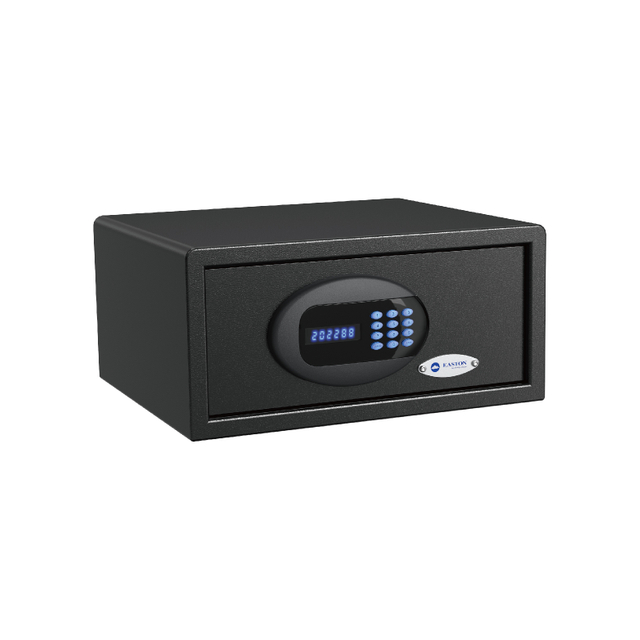
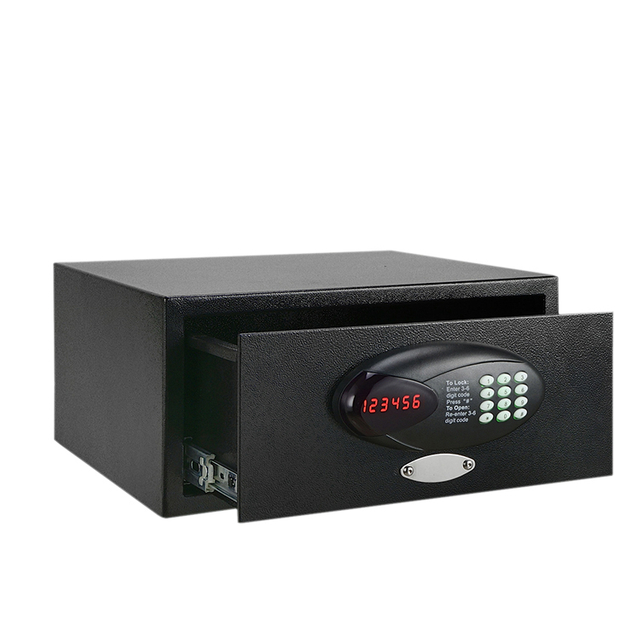
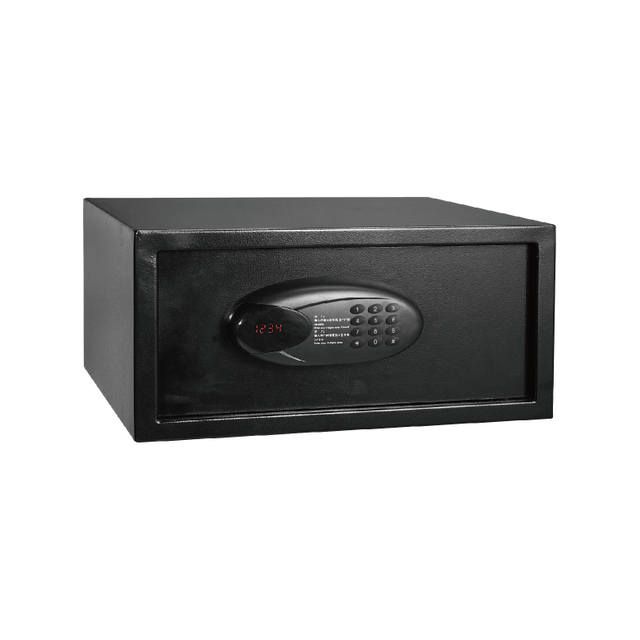
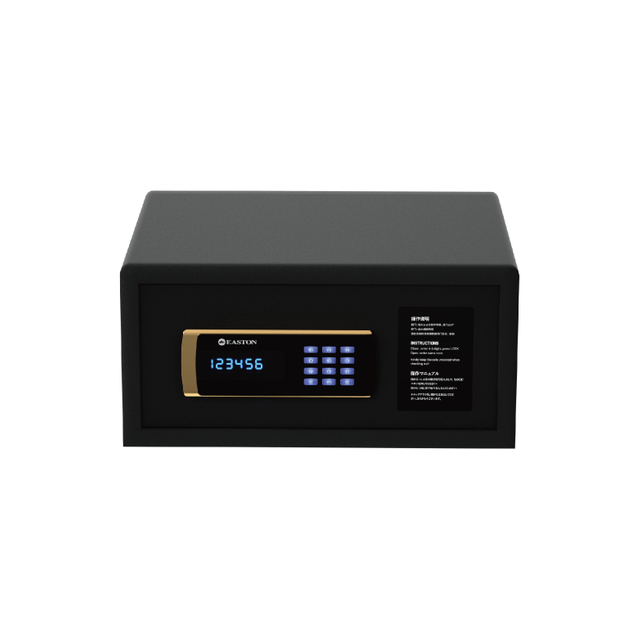
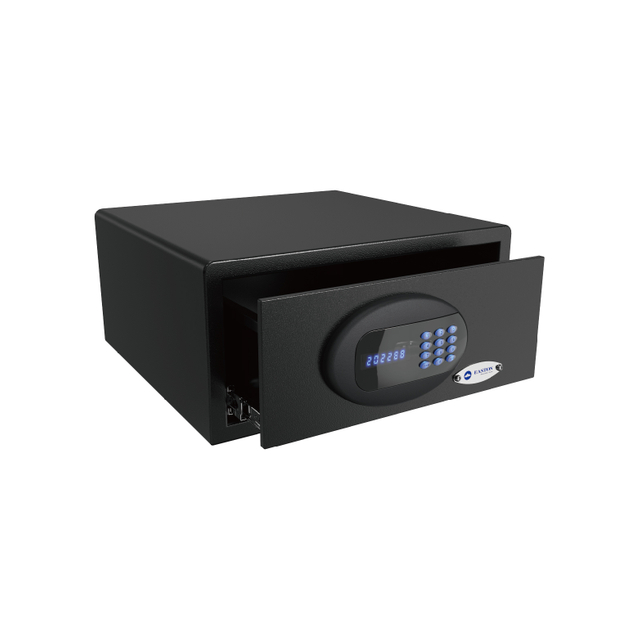
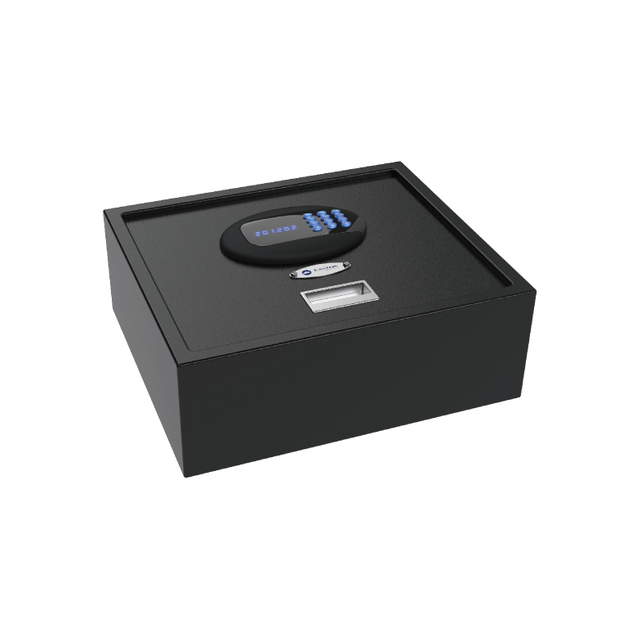
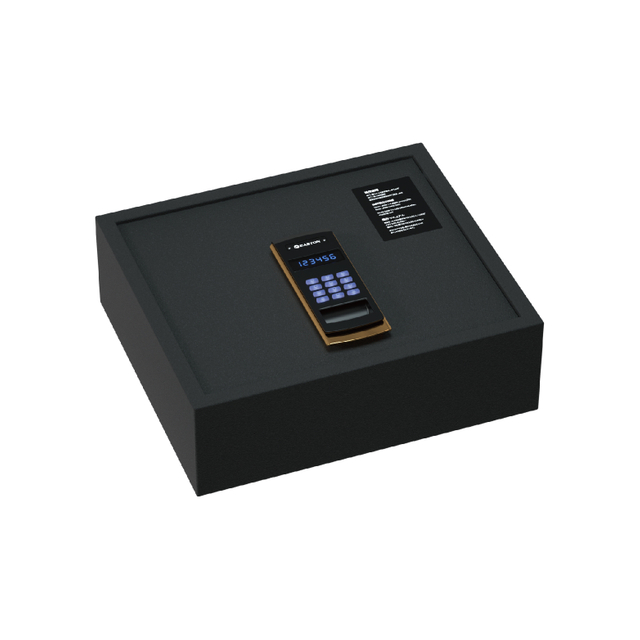
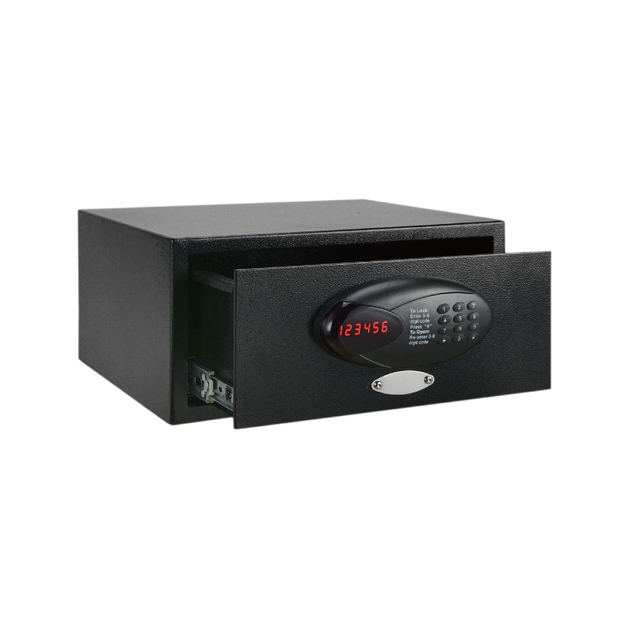
This is where the hotel safe box earns its keep. A well-built commercial unit doesn't just lock; it communicates. The illuminated keypad glows in a dark room, so a groggy guest at 1 AM doesn't fumble. The large LED display echoes the entry, and visual and audio operating signals confirm every press. That feedback loop is the difference between a guest in control and one standing there praying.
Guests set their own 3-to-6 digit code — no key to carry, nothing to sign. Forget it? Staff open the unit via a mechanical key override or emergency handheld override, no drilling. And a 200-event audit trail kills the old "who left it open?" argument. The data settles it.
Comparison 1: Old Key Lockbox vs. Digital Electronic Safe Box with Keypad Lock
Feature | Traditional Key Lockbox | |
Guest access | A key to carry and lose | Self-set 3–6 digit code |
Front-desk calls | Frequent "lost key" | Rare |
Audit capability | None | 200-event trail |
Locking strength | Lightweight cam lock | Motorized twin 19mm bolts |
Power source | Hardwired or dead | 4×AA with low-battery alert |
Pop the door and the real engineering reveals itself. The motorized locking system shoves two 19mm diameter hardened steel locking bolts into the frame — not the flimsy cam lock in a nightstand. Enter the wrong code three times and the unit automatically locks out for five minutes. A would-be thief gets one shot, then silence.
Then the power question, the one that frightens maintenance teams. These units run on four AA battery cells — no rewiring, no holes in the wall. Press LOCK and the low-battery indicator lights up, so a housekeeper swaps cells in thirty seconds before the unit dies on a guest. The W420 × D370 × H200 mm footprint swallows a 15-inch laptop flat yet still fits a closet shelf.
Run the numbers like an operator, not a guest:
● Fewer lost-key calls. The only "key" the guest needs is one they remember.
● Zero rewiring. Battery power beats a hardwired install in an old building.
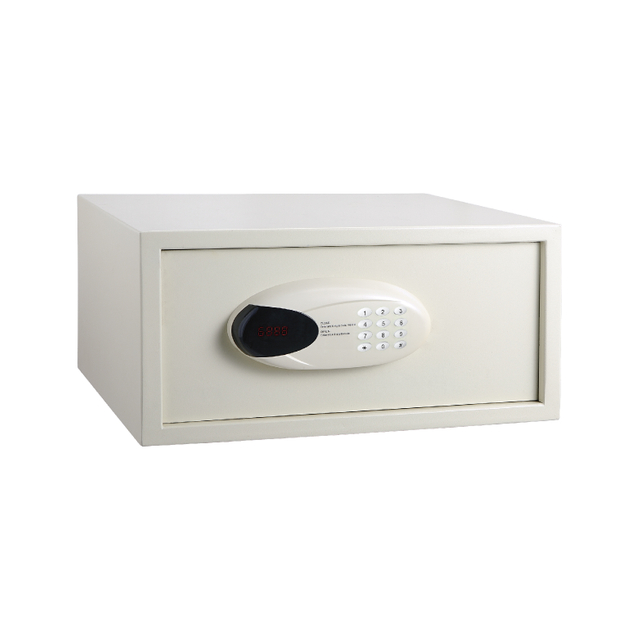
● Damage control. A scratch-resistant powder coat in black or ivory shrugs off luggage scrapes.
● Silent service. Nobody touches the guest's valuables, so nobody gets blamed.
Multiply that by two hundred rooms and the savings stop being trivial.
Comparison 2: Safe Box with Key and Code vs. Front-Desk Deposit Service
Aspect | Front-Desk Deposit | Safe Box with Key and Code |
Guest effort | Queue, forms, ID check | Ten seconds, self-set code |
Staff hours | Significant | Near zero |
Privacy | A clerk handles items | Fully self-service |
Security chain | Human, fallible | Motorized bolts + code |
After-hours access | Closed | 24/7 |
Don't buy on a photo. Buy on paperwork:
Demand the security grade. Ask for a model tested to EN 14450 (European burglar-resistance) or UL 1037. A vague "anti-theft" claim isn't a standard.
Test the keypad in the dark. Weak illumination or muddy feedback means guest complaints.
Check battery access. A safe that needs full removal to swap cells becomes a problem.
Ask for the audit depth. Twenty events won't cut it; two hundred will.
Verify warranty and lead times. The cheapest unit is worthless if spare parts take eight weeks.
A credible manufacturer ships CE marking, RoHS compliance, and FCC certification with the invoice. And if a supplier tempts you with a fireproof safe deposit box, verify the EN 1047-1 fire rating first. "Fireproof" is a label; a test report is a fact. Hoteliers get burned exactly when they skip this.
The leap from a rattling key lockbox to a purpose-built locking safe box rewrites the guest experience in ways the front desk never sees. Trust is rebuilt in ten seconds, chaos shrinks, disputes dissolve into logs. A safe box with code isn't a room accessory — it's the quietest marketing campaign your property will ever run.
Weigh the bolt diameter, the audit depth, the battery design, and the certification paperwork. Get those right and the reviews follow. Get them wrong, and no lobby marble will save you.
Q: Can a guest open a hotel safe after forgetting their code?
A: Yes. Staff use the mechanical key override or the emergency handheld override to open any unit without drilling — then the guest simply sets a fresh code.
Q: What happens after three wrong entries?
A: The unit automatically locks out for five minutes. This is deliberate tamper protection, not a malfunction.
Q: Do keypad hotel safes need hardwiring?
A: No. These run on four AA batteries, so installation is a shelf and a pair of hands — no electrician, no wall holes.
Q: Will a 15-inch laptop fit?
A: The W420 × D370 × H200 mm interior takes a 15'' laptop flat, with room left over for documents or a tablet.
Q: How does the audit trail actually help the hotel?
A: The 200-event log records opening history. When a guest claims "someone opened my safe," the record settles it in seconds instead of a dispute.
Q: What's the difference between CE marking and EN 14450?
A: CE addresses electrical safety of the electronics; EN 14450 grades burglary resistance (S1/S2/S3). A safe needs both to be credible.
Q: Is a fireproof safe deposit box the same as a theft-rated safe?
A: No. Fire rating (EN 1047-1) and burglary resistance (EN 14450) are separate tests. Confirm which one you actually need — and demand the report.