Views: 0 Author: Site Editor Publish Time: 2026-09-16 Origin: Site

A guest pulls a wrinkled blazer out of her suitcase at 8:40 a.m. She has a client meeting in twenty minutes. Ten minutes later she is in the lobby, crisp and composed, right on schedule. Nobody photographs that moment, and nobody types "the iron was excellent" into a five-star review. Yet that small detail is precisely what makes a stay feel seamless instead of stressful.
Most hotel operators treat the iron like an afterthought. A box of wattage sitting in a closet. That's the old way of thinking, and it misses what a modern commercial tool actually does.
People press shirts before job interviews. Trousers before dinners. Dresses before weddings. When the iron fails them, the stay unravels around it. Scorched fabric, leaking water, a plate that never gets hot. High-end properties know this, so they stock rooms and housekeeping carts with hotel steam irons built for constant use, not the leftover models from someone's kitchen.
Key Takeaways
⏱ A 30-second horizontal shut-off is the single biggest safety upgrade a hotel can make.
️ Steam irons auto shut off in two positions, flat in 30 seconds, upright in 8 minutes, so a forgotten iron never becomes a fire risk.
Steam pressure, not brute heat, removes creases from cotton, linen and silk without shine marks.
✅ CE, CB and GCC approvals turn a utility item into a defensible procurement decision.
The Iron Is a Silent Brand Ambassador
Who actually uses the iron in a hotel room? The business traveler with a 9 a.m. meeting. The wedding party pressing gowns the night before. The parent rescuing a school uniform before breakfast. These guests rarely mention the iron in their reviews. They just remember whether everything felt effortless.
Here's the uncomfortable truth: a wrinkled shirt at the wrong moment reads as a hotel failure, even when everything else went perfectly. Housekeeping feels the same pressure. Every shift, they press bedding, table linens and uniforms against the clock. Give them equipment that breaks down and you're betting your reputation on a gamble.
That's why the hospitality industry is quietly dropping consumer models. Hotel operators now demand hotel steam irons with commercial duty cycles, visible status feedback and certified safety systems, not the cheapest thing on a supplier list.
What a Commercial Iron Does Differently
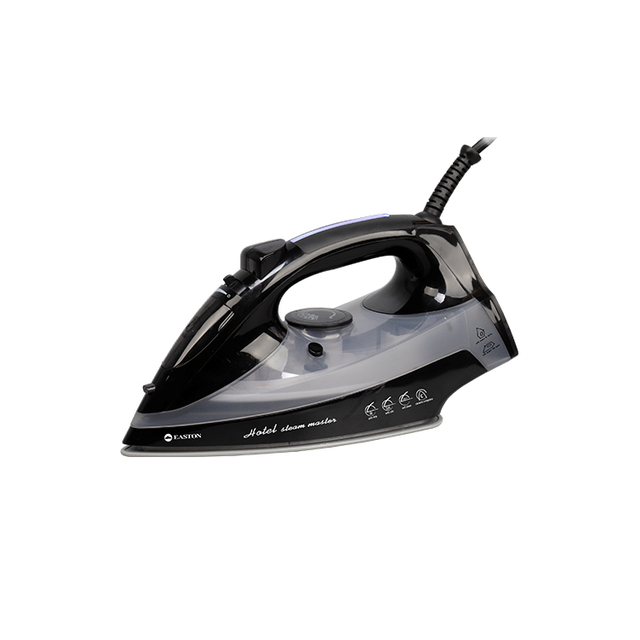
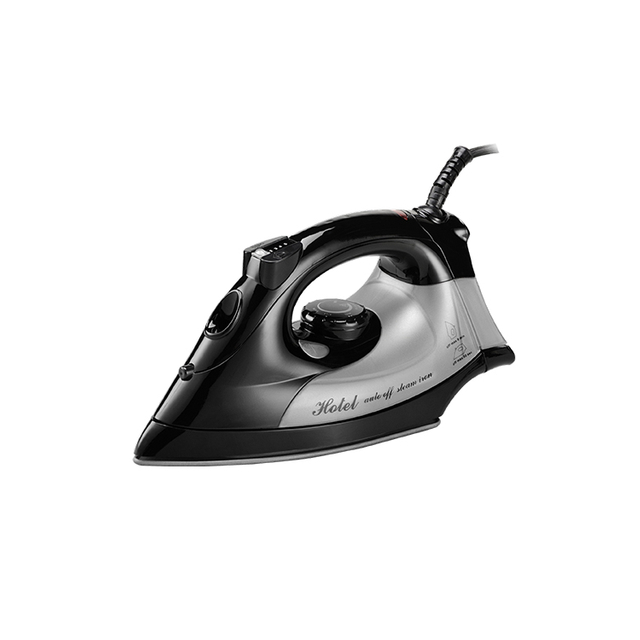
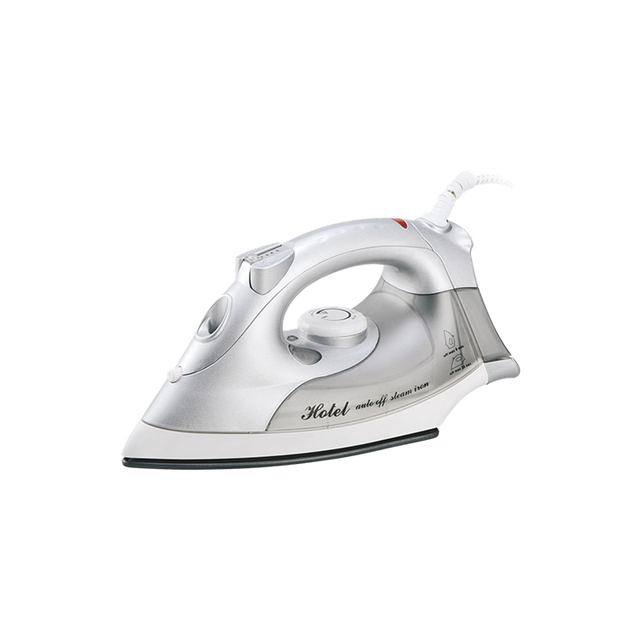
The EASTON ES2014 is what happens when a device gets designed around hotel reality. A high power steam iron at 1600W heats up fast and holds the temperature through back-to-back pressing. The steam irons with nonstick soleplate glide over delicate fabrics without snagging or sticking. Important when a guest has exactly four minutes before checkout.
Four functions cover every fabric scenario: ☀️ dry ironing for crisp edges, continuous steam for stubborn creases, ️ spray for tough wrinkles, and a blast of steam for heavyweight cottons. A clear ON and READY indicator light takes the guesswork out. Guests and staff know the moment the plate is hot enough to use safely.
The 2-meter cord with a Euro plug (UK plug available) reaches across the ironing board without stretching. The silver body resists fingerprints and fits the clean lines of a premium room. Small details? Yes. But small details are what guests actually remember.
Table 1. Household iron vs. commercial hotel steam iron (ES2014)
What Matters | Household Iron | Commercial Hotel Steam Iron (ES2014) |
|---|---|---|
Auto shut-off | Often absent or slow | 30s flat / 8min upright |
Soleplate | Basic coated steel | Non-stick, glide-optimized |
Duty cycle | Occasional use | Back-to-back housekeeping shifts |
Status feedback | None or vague | ON and READY indicator light |
Certification | Varies wildly | CE, CB, GCC approved |
Safety, Compliance and the 30-Second Rule
Hotels have a problem most homes don't: irons get left on. A guest answers a phone call mid-iron. A housekeeper gets pulled away mid-task. That's why the auto shut-off system on the ES2014 isn't a luxury. It's the difference between an inconvenience and an insurance claim. Leave the iron flat on a shirt and it powers off after 30 seconds. Leave it upright and it switches off after 8 minutes.
Behind that simple behavior sits layered protection: a thermostat that throttles heat, a thermal fuse that cuts the circuit if temperatures spiral, and the IEC 60335 household-appliance safety standard governing the whole design. Every unit ships with CE approval, with CB and GCC certification available for export markets. For procurement teams, those marks are the difference between a defensible purchase and a liability.
Table 2. The two-position safety net
Scenario | What Happens | Why It Matters |
|---|---|---|
Iron left face-down on a shirt | Powers off after 30 seconds | No scorch marks, no fire risk |
Iron left standing upright | Powers off after 8 minutes | Cuts standby energy waste |
Guest forgets to unplug | Shut-off plus READY light state | Peace of mind for housekeeping |
Procurement: What to Verify Before You Sign
Marketing language is cheap. Verifiable engineering is not. So before you approve a supplier, ask for hard evidence:
Shut-off timing: confirm the exact seconds in both positions, not "some kind of auto-off."
Soleplate quality: a genuine non-stick coating survives thousands of passes. Cheap coatings peel within months.
Cord and plug: a 2-meter cord with the right plug prevents daily guest frustration.
Certification documents: request the actual test report, not a logo pasted into a brochure.
Sample testing: run 50 consecutive pressing cycles before committing to bulk orders.
Implementation Realities: Limescale, Training and Longevity
Even the best iron dies young in the wrong hands. Hard water leaves limescale inside the steam chamber. That clogs the vents and spits brown residue onto white shirts. Add a descaling routine to housekeeping schedules. Show staff how to use the spray and blast functions correctly. Most fabric damage comes from misuse, not the tool. And store the cord loosely. A tightly wrapped 2-meter cord develops weak joints over time.
None of this is glamorous. But it's the unglamorous work that separates hotels where irons last five years from hotels replacing them every season. The properties that get this right understand one thing: guest experience isn't built in the lobby. It's built in the details guests never talk about, but always feel.
Conclusion
A commercial iron will never headline a marketing campaign. It won't win design awards. What it does is quietly protect the moments that matter: the interview, the wedding, the meeting, the checkout. Hotel steam irons with auto shut-off, non-stick soles and certified safety turn a forgotten corner of the room into a silent advantage.
Audit what's currently in your rooms. Ask your supplier for certified test reports. Press a sample through ten guest cycles before you buy in bulk. The guests who never mention the iron are exactly the guests you're protecting.
FAQ
Q: Why does a hotel iron need auto shut-off when guests are only in the room for a few hours?
A: Honestly, guests get distracted. A phone call, a knock at the door, a crying kid. Any of these pulls them away mid-iron. An iron left face-down on fabric hits scorching temperatures fast. A 30-second horizontal shut-off removes that risk without the guest even noticing.
Q: What is the difference between a household iron and a hotel steam iron?
A: Duty cycle and safety, mostly. Household irons assume occasional use. Hotel steam irons are built for back-to-back pressing across multiple shifts, with reinforced heating elements, non-stick soleplates, indicator lights and certified auto shut-off systems. Designed to run, not to rest.
Q: How long does the iron take to heat up?
A: Fast. The 1600W element heats the soleplate quickly, and the ON and READY indicator light tells the user exactly when the plate has reached working temperature. Nobody irons with a cold plate, and nobody burns fabric with an overheated one.
Q: Can the iron handle delicate fabrics like silk?
A: Yes. The temperature dial adjusts the heat, while the spray and blast functions add targeted moisture. The non-stick soleplate glides without catching or snagging, protecting silk, satin and other delicate weaves from shine marks and pulls.
Q: What certifications should a hotel iron have?
A: At minimum, CE approval for the European market. For wider export programs, CB certification and GCC compliance add credibility. The safety standard behind these marks, IEC 60335, covers overheating protection, cord strain relief and electrical insulation.
Q: How do we prevent limescale problems in hard-water regions?
A: Use filtered or distilled water in the tank, and schedule a monthly descaling routine. When limescale builds up, steam output drops and residue can stain fabrics. Regular descaling keeps the steam chamber clean and extends the iron's service life.
Q: Is 1600W powerful enough for hotel use?
A: For in-room and housekeeping ironing, yes. 1600W balances fast heat-up with stable temperature control. Higher wattage without thermal management just creates heat spikes; a well-regulated 1600W element delivers consistent results across cotton, linen and blended fabrics.