Views: 0 Author: Site Editor Publish Time: 2026-09-08 Origin: Site

Nobody wakes up in a hotel and dreams about the iron. Yet that unassuming device can decide whether a morning meeting looks sharp or improvised. The problem? Most guestroom irons were never built for the job. They take forever to heat, dribble water, and scorch fabric when it matters. Hotel steam irons built for commercial duty change that arithmetic entirely. When the right tool sits in the drawer, nobody notices it. When the wrong one sits there, everybody notices the wrinkled shirt.
Key Takeaways
Zero-Callback Pressing — 30-second preheat plus constant 140–160°C steam removes the wait.
Constant Steam — 25–30 g/min sustained output presses deep creases instead of dampening fabric.
Safety by Default — shut-off after 8 minutes upright or 60 seconds with a dry tank.
Operational ROI — 10 minutes of continuous ironing from a 200ml tank, fewer callbacks.
Ask a housekeeping supervisor which amenity fails most often and the answer rarely shows up in guest surveys. Irons quietly break, leak, and underperform. Budget travel units were designed for a suitcase, not for daily abuse. A guestroom iron faces hard water, rushed mornings, and users who may never have pressed a collar.
The result is a silent complaint. Guests rarely call the front desk about a wrinkled shirt. They simply remember it, and that memory resurfaces in an online review or a booking decision. Hotels spend fortunes on lobbies and bedding, then hand guests a ten-dollar iron that quietly undermines the whole impression.
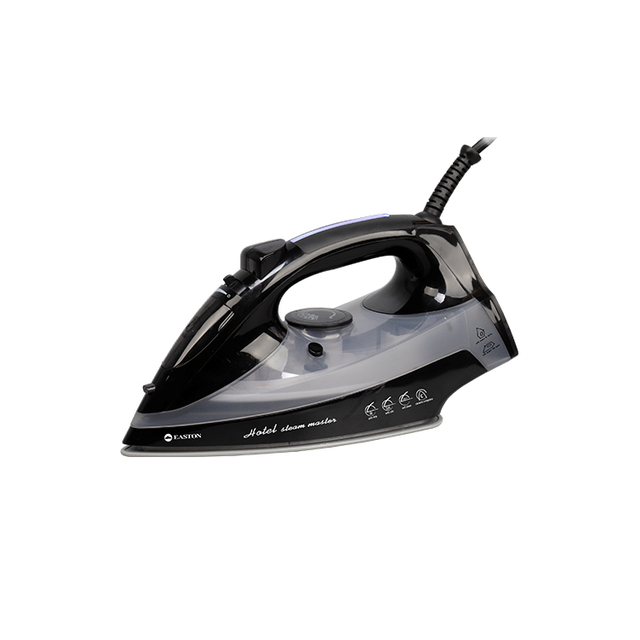
The difference is measurable before you even plug it in. A commercial steam iron holds a thermostat-controlled temperature band of 140–160°C, hot enough to set creases, gentle enough for silk and blends. It produces a steady steam output of 25–30 g/min at 2.5 bar pressure, driven by a 1600W heating element. Retail units spike and fade; this one holds its line.
The 200ml water tank supports ten minutes of continuous ironing. That is one shirt, one pair of trousers, one collar. No refills, no racing the clock.
Feature | Typical Guestroom Iron | EASTON ES2017 |
|---|---|---|
Heat-up time | 60–120 seconds | 30 seconds |
Steam delivery | Weak, intermittent bursts | Constant 25–30 g/min |
Temperature control | Drifts while idle | Held at 140–160°C |
Continuous runtime | 3–5 minutes | Up to 10 minutes |
Safety shut-off | Often absent | 8 min upright / 60 s dry tank |
Soleplate | Basic coated metal | Non-stick, low drag |
Approvals | Varies by brand | CE, CB, GCC |
An iron left heating in an empty room is a risk no operator wants to insure. The ES2017 attacks the problem twice: it shuts off after 8 minutes in the vertical position and 60 seconds after the tank runs dry. Two triggers, one outcome: no forgotten appliance left glowing.
The non-stick soleplate glides over delicate fabrics and resists scorch. As an electric steam iron with a 2m power cord and UK or Euro plug options, it drops into existing room layouts without adapters.
Certification is the part guests never see and buyers must never skip. CE marking covers European safety compliance, the IECEE CB Scheme certificate is recognized across member countries, and GCC certification clears the Gulf market. These approvals come from independent third-party testing, the paper trail an engineering manager needs before standardizing a hotel.
Walk through one hotel morning. 7:10 a.m., the guest plugs in. 7:11, the READY indicator glows; preheating finished in thirty seconds. Steam follows at once. The soleplate holds its temperature, so the shirt presses clean on the first stroke instead of the fifth.
Nine minutes later the iron stands upright, the shirt hangs crisp, and the guest leaves the room on time. No spitting water. No scorch smell. No improvised damp-towel tricks.
That is the gap between a clothes iron with steam that merely exists in a room and a hand held steam iron designed for the job. Horizontal mode handles collars and cuffs on a board; vertical mode steams curtains, jackets, and suits still on the hanger.
Moment | Wrinkled Morning | Zero-Callback Morning |
|---|---|---|
First touch | Cold soleplate, guest waits | 30 seconds to READY light |
Mid-press | Steam sputters, fabric sticks | Constant 25–30 g/min glide |
Result | Guest settles for damp | Crisp, pressable finish |
After checkout | Housekeeping replaces unit | Unit ready for the next guest |
Hospitality buyers think in cost per use, not unit price. A hospitality iron that reaches temperature in 30 seconds spends less time under power, and every saved minute lands on the utility bill. A non-stick soleplate survives more presses. Auto shut-off trims liability and idle draw. Fewer broken units, fewer callbacks, fewer staff hours.
Guest satisfaction compounds the same way. A crisp shirt is a small detail. But reviews are built from small details. When housekeeping trusts the iron, rooms turn faster. That is hospitality-grade reliability translated into energy efficiency and repeat bookings.
Treat the spec sheet like a contract. Demand numbers, not adjectives.
Visible certification: CE, CB, GCC at minimum.
Real steam specs: output in g/min, temperature range, preheat time.
Runtime math: tank size against minutes of continuous ironing.
Hands-on test: soleplate glide and handle weight on actual garments.
Market fit: UK or Euro plug, 220–240V, and logo customization.
A great EASTON hotel steam iron is invisible. Guests never think about it; they simply notice that their shirt looks right. For operators the math is direct: fewer callbacks, lower energy draw, longer service life, one less thing between turnovers. The ES2017 was built for that quiet job: crisp mornings, no complaint logged.
Q: Are hotel steam irons safe to leave in a guestroom?
A: Yes, when they carry dual auto shut-off like the ES2017. Power cuts after 8 minutes upright and 60 seconds after the tank runs dry, backed by CE, CB, and GCC approvals.
Q: How fast does the ES2017 heat up?
A: About 30 seconds. The READY indicator confirms the soleplate has reached working temperature before the guest starts pressing.
Q: Can it iron clothes while they hang?
A: Yes. Vertical mode steams jackets, curtains, and hanging suits; horizontal mode handles collars and cuffs on an ironing board.
Q: Why does constant steam matter more than a steam burst?
A: A burst dampens fabric briefly and fades. Constant 25–30 g/min steam at 140–160°C relaxes fibers steadily, so deep creases fall out instead of resettling.
Q: How long can a guest iron continuously?
A: The 200ml tank supports up to 10 minutes of continuous use, enough for a shirt, trousers, and a collar without refilling.
Q: What certifications should a hotel iron carry?
A: At minimum CE marking for Europe, the IECEE CB Scheme certificate for international recognition, and GCC certification for Gulf-market properties, all verified through independent testing.
Q: Will the soleplate damage delicate fabrics?
A: The non-stick soleplate and the constant 140–160°C window greatly reduce scorch risk. Testing on a hidden area remains good practice for silk.