Views: 0 Author: Site Editor Publish Time: 2026-09-05 Origin: Site


The closet ironing board is the most ignored amenity in a guest room — until a business traveler needs it at 6:40 a.m. That's when a wobbly frame, a melted iron rest, or a scorched cover turns a small convenience into a visible brand failure. Hotel ironing boards carry a quiet promise: press your shirt, look sharp, feel taken care of. Break that promise and guests notice. Keep it, and they never think about it twice — which is precisely the point.
Most boards found in hospitality are repurposed retail products. They sway on thick carpet, buckle under a heavy steam iron, and collapse into a tangle of legs when housekeeping works against the clock. Commercial-grade design changes the math. Below, we walk procurement teams, interior designers, and operations managers through what genuinely separates a guest-ready board from a liability — and why that difference shows up in review scores, room turnover time, and repeat bookings.
✔ Key Takeaways
Construction beats price. The mesh top, leg frame, and locking mechanism decide longevity far more than the sticker.
Steam escape is a safety feature, not a buzzword — it protects the cover, the iron, and the guest's favorite shirt.
Seven-level height adjustment serves two users at once: guests of every stature and housekeepers protecting their backs.
Placement matters. Wall-mounted, freestanding, and tabletop formats each fit different room types and back-of-house realities.
Third-party documents — quality certification, inspection reports — are the cheapest insurance a procurement team can buy.
A wrinkled suit before a morning meeting is a small crisis. A guest who wrestles an unstable board to solve it remembers the fight, not the room rate. Guest satisfaction in this category is decided in under three minutes: does the board sit steady, does the iron rest stay cool, does the cover look clean? Answer yes to all three and the amenity disappears into the background. Answer no, and that board becomes the most memorable object in the room. This is why hotel ironing boards deserve the same specification care as the mattress.
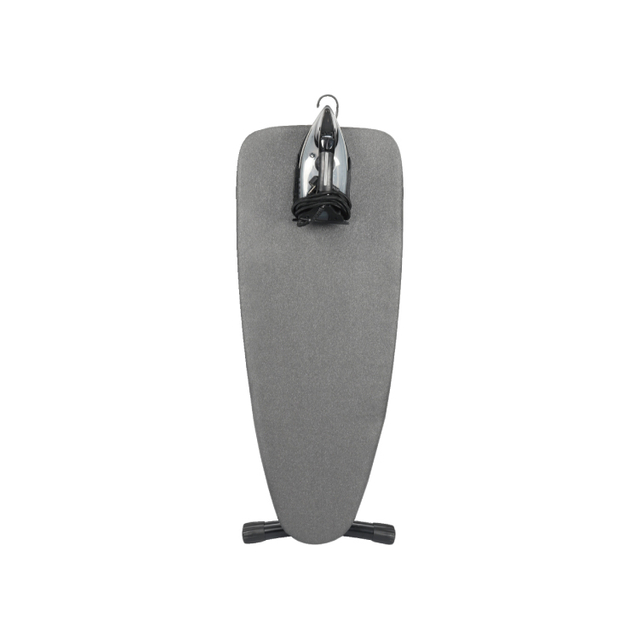
Housekeeping sees the same product through a different lens: time. Re-stabilizing a crooked frame, wiping rust off unpainted legs, or re-fitting a scorched cover eats minutes out of every room. Over a five-year property lifecycle, those minutes become real money. A board that folds flat to W320×H1230mm and stands without fuss is one fewer headache in a fifteen-room shift.
Then there's the risk layer. An iron tipped off a flimsy rest burns carpet, trips guests, or ends up as a staff injury claim. Non-slip end caps on each leg and a heat-resistant iron rest are not spec-sheet decoration — they are the difference between an incident report and an uneventful Tuesday.
Here's the uncomfortable truth most spec sheets skip: retail boards are built to sell once. Commercial boards are built to survive a thousand presses.
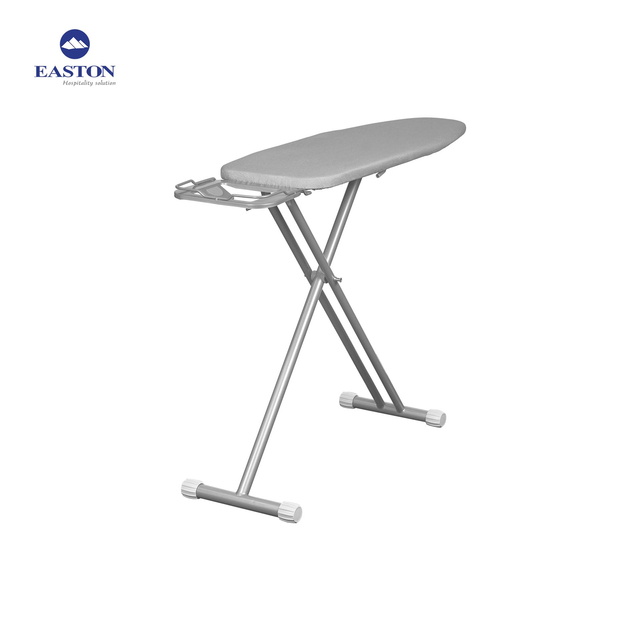
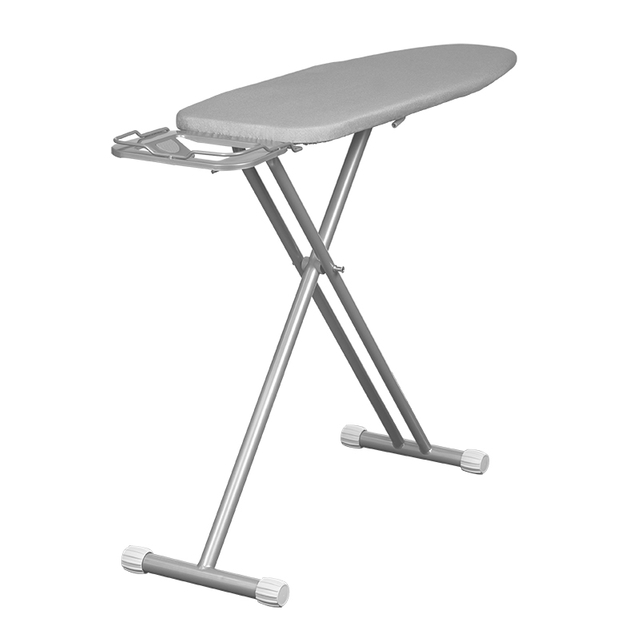
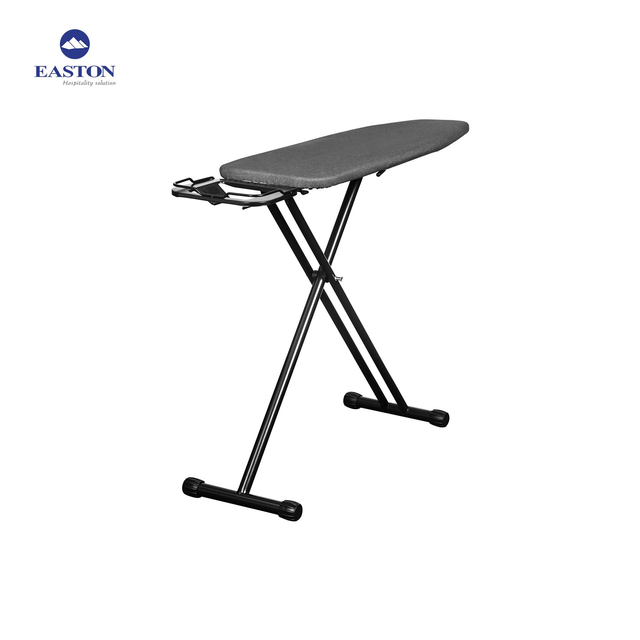
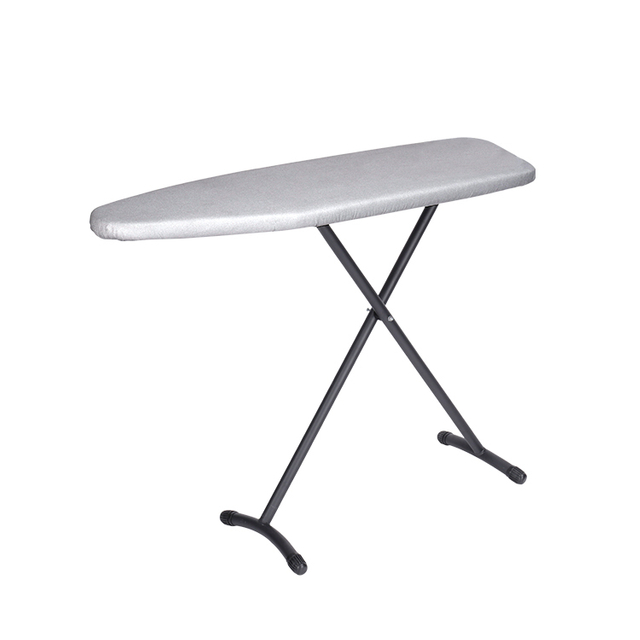
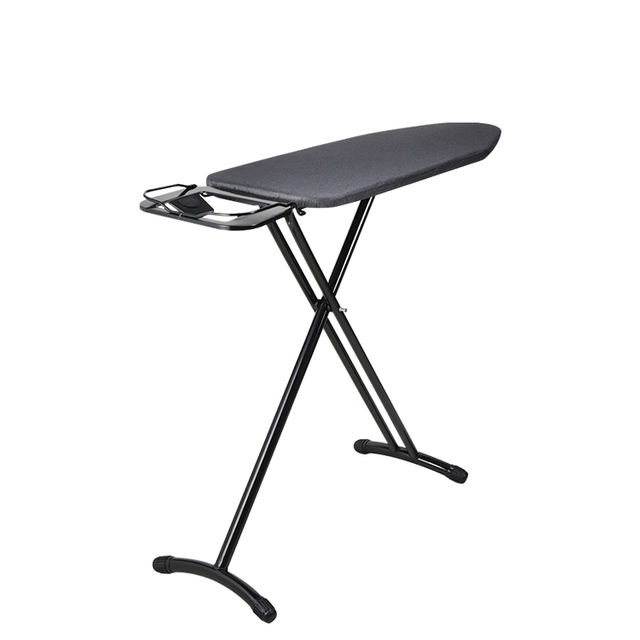
The ES2206 from EASTON is a useful case study — not because it's exotic, but because every detail answers a complaint we hear from operators.
Steel mesh top: woven metal delivers the steam permeability that retail fiberboard can't. Steam escapes instead of condensing back into the padding, so covers stay drier, irons glide smoother, and pressing takes half the effort.
Scorch-resistant metalized cover: reflects heat away from the padding. No burn-through, no brown halo on white shirts, no mid-stay cover replacement.
Double T-leg and tubular construction: lateral stiffness that X-frames simply don't have. Push it sideways on carpet — it doesn't shiver.
Mechanism locking system: locks open at your chosen height and locks closed for storage. No collapsing mid-press, no pinched fingers.
Seven-level height adjustment up to 79cm: a 155cm housekeeper and a 190cm guest both get a natural working posture. That's ergonomics serving two different users at zero extra cost.
304 stainless steel hardware and a powder-coated finish shrug off the humidity of in-room bathrooms and laundry corridors.
The ironing surface measures L930×W310mm — long enough for a full shirt sleeve, narrow enough to sit inside standard wardrobe depth. Both black and silver finishes match room styling.
Commercial Board vs. Typical Retail Board
Factor | EASTON ES2206 (Commercial) | Typical Retail Board |
|---|---|---|
Top material | Steel mesh — steam passes through | Solid fiberboard — traps steam, sags over time |
Cover | Scorch-resistant metalized | Thin cotton — burns fast |
Leg structure | Double T-leg, tubular steel | X-frame — lateral wobble |
Height levels | 7, up to 79cm | 3 fixed notches |
Stability | Non-slip end caps + locking mechanism | Rubber tips only |
Folded size | W320×H1230mm | Bulky, uneven fold |
The best board is the one guests can actually find. Placement decides usability before a single shirt is pressed.
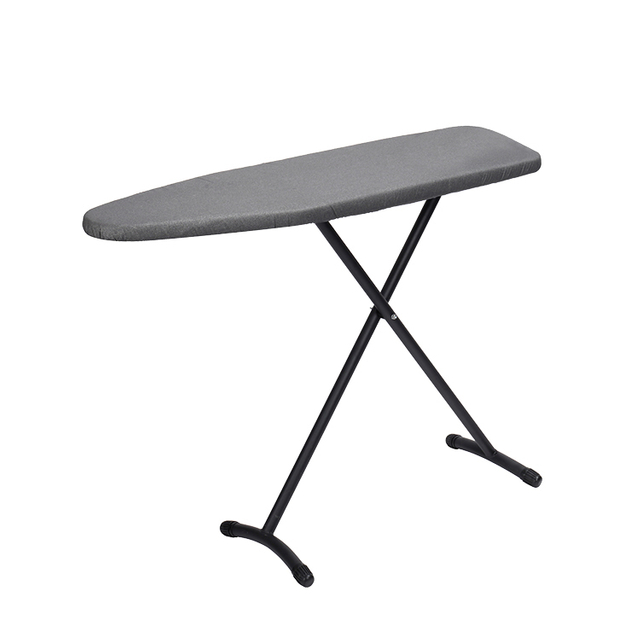
An ironing board wall mounted in a wardrobe or laundry niche saves floor space and keeps the amenity visible — ideal for compact rooms where a freestanding frame would crowd the closet. Tabletop ironing boards suit tight spaces too: they live on a shelf and come out for quick touch-ups, though they demand a sturdy surface and shorter pressing sessions. For most rooms, a freestanding T-leg board remains the workhorse: zero installation, replaceable in seconds, stable on any floor type.
Height adjustability changes the placement math as well. Adjustable height ironing boards let one SKU serve the full range of guest statures and housekeeping preferences — fewer complaints, fewer backaches, one product in inventory instead of three. Sound like a small detail? It isn't.
Placement Comparison
表格
Criterion | Wall-Mounted | Freestanding T-Leg | Tabletop |
|---|---|---|---|
Floor space needed | None | Moderate | None (needs surface) |
Installation | Bracket + drilling | None | None |
Best for | Compact rooms, back-of-house | Standard guest rooms | Suites, laundry rooms |
Ironing comfort | Depends on bracket height | Full (7-level) | Limited by surface height |
Housekeeping speed | Fast | Fast | Moderate |
Procurement should never take a supplier's word for quality — the documents tell the truth. A factory running under an ISO 9001 quality management system shows process discipline. SGS third-party inspection reports verify batch-level consistency before shipment. BSCI social audits confirm ethical production conditions. For European-bound stock, CE marking and RoHS compliance cover material and safety expectations. None of these replace a physical sample test — but they filter out the suppliers who would cut corners later.
Summary: A commercial ironing board earns its keep in three quiet ways — it steadies the guest experience, it accelerates housekeeping, and it shrinks risk. The visible differences are exactly where retail boards fail.
Recommendation: Standardize on one proven model before renovation, not after — treat it as a brand standard, like the bath towel fold. Match placement to room tier: wall-mounted for compact rooms, freestanding for standard, tabletop for suites. When hotel ironing boards are chosen with the same care as bedding and bath towels, the payoff is invisible but constant.
Next Action: Order a single unit, install it in a mock-up room, and run a two-week trial with real guests and real housekeeping shifts. Measure complaints, fold time, and cover condition. Then roll out with confidence.
Q: What size ironing board fits a standard hotel closet?
A: Look for a folded footprint around W320×H1230mm — narrow enough for wardrobe depth while keeping an L930×W310mm ironing surface. Most hotel ironing boards in this class store upright or hang in a closet niche.
Q: Can this board be wall mounted?
A: Yes — an ironing board wall mounted bracket suits compact rooms and laundry areas, freeing floor space. The freestanding version needs no installation and remains the more flexible default for most properties.
Q: How does the steel mesh top help with steam irons?
A: Steam passes through the mesh instead of condensing into the padding. That keeps the cover drier, prevents musty smells, and stops the board from transferring moisture back onto freshly pressed clothes.
Q: Why is 7-level height adjustment worth paying for?
A: Guests and staff come in different heights. Adjustable height ironing boards reduce back strain for housekeeping and improve pressing quality for guests — one SKU covers a range fixed-height boards cannot.
Q: How do you clean the scorch-resistant cover?
A: Wipe with a damp cloth once the board cools; the metalized surface resists burn marks and most staining. Replace the cover when the top layer shows wear — it's a low-cost part that keeps the whole unit looking premium.
Q: Are tabletop ironing boards a reliable alternative?
A: For suites and compact rooms, yes — they store flat and handle quick touch-ups. For daily pressing at volume, a full-size freestanding or wall-mounted board with a locking mechanism is the more dependable choice.
Q: What certifications should a hotel ironing board supplier hold?
A: Demand ISO 9001 quality systems, SGS inspection reports, and CE / RoHS compliance where relevant. These documents, alongside a physical sample, are the strongest signal of commercial-grade durability.