Views: 0 Author: Site Editor Publish Time: 2026-11-27 Origin: Site
Guests almost never compliment a fridge. They complain about one. A compressor that kicks in at 2 a.m., a tray of meltwater under the shelf, a door that swings into the carpet — these small failures colour the whole stay, and they surface in reviews that no lobby refurbishment can undo. Hotel mini refrigerators sit in the quietest corner of the guest experience, which is precisely why the wrong unit does the most damage.
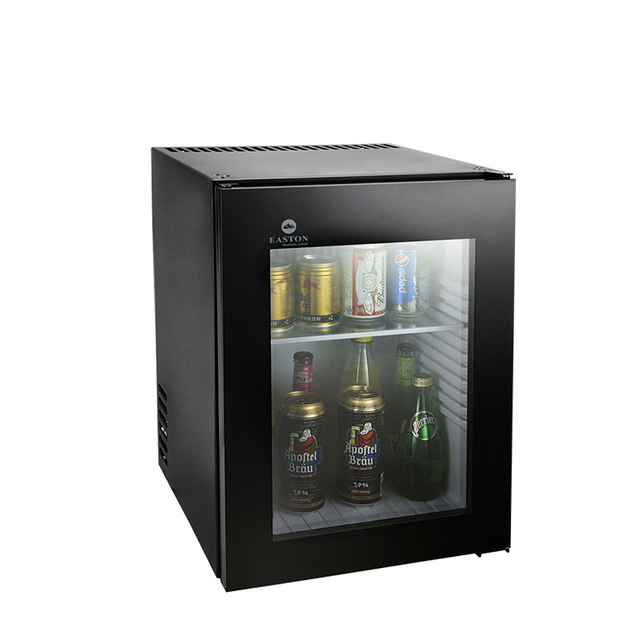
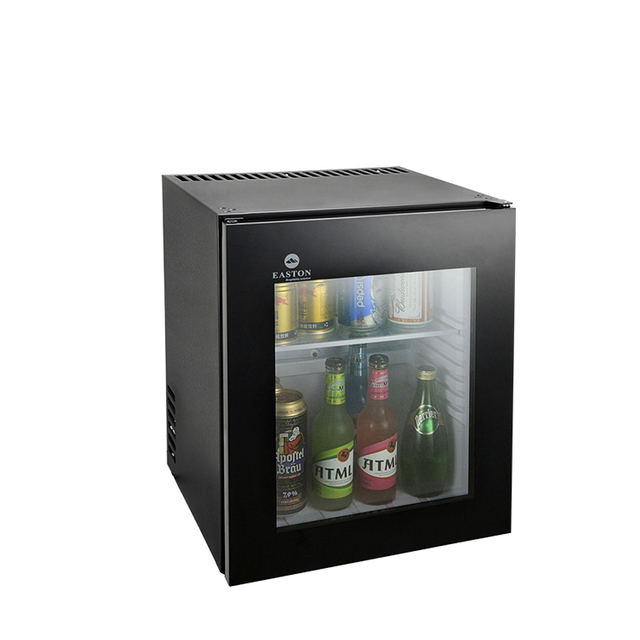
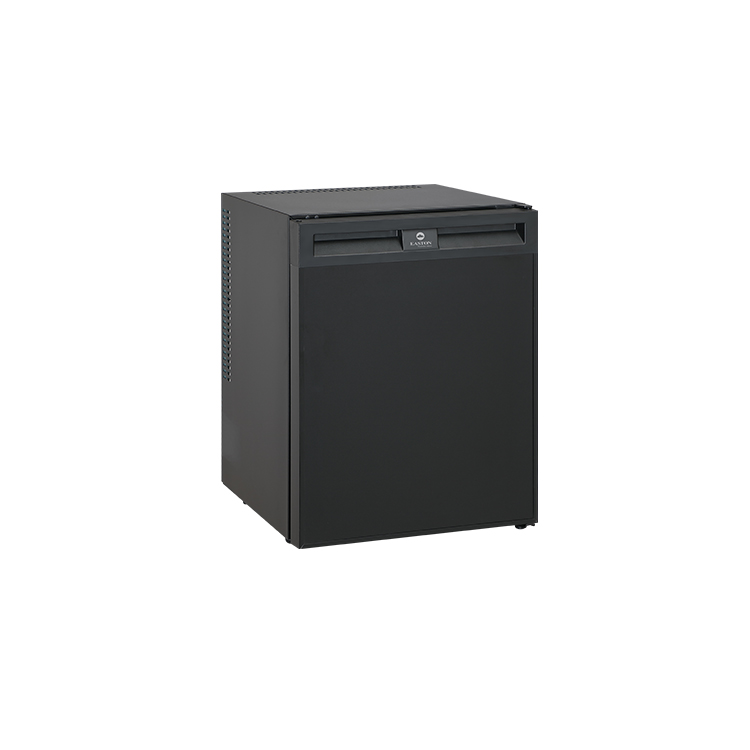
This guide takes one EASTON 40L lockable model — ES7533 — and works backwards from the three moments a guest actually touches it: arrival, midnight, checkout. Every claim below maps to a number you can check on a spec sheet.
Noise, not cold, drives minibar complaints. A thermoelectric mini refrigerator has no compressor, so there is no cycling hum and no start-up vibration through the nightstand.
4–6°C is the working zone for drinks and dairy; a second 9–11°C band keeps items that should not sit near freezing.
0.24 kWh/24h at 58W keeps the unit out of your energy-per-room-night debate entirely.
A lockable mini fridge turns minibar stock from a shrinkage line item into a reconciled one.
A guest forms an opinion of the minibar before unpacking. Door opens, light comes on, cold air, no sound. Or: door opens, warm air, and a rattle from behind the cabinet.
That is the whole test. Nothing about cooling capacity matters if the first three seconds feel cheap.
Compressor units are cheap to build and loud to live with. The compressor engages, the cabinet resonates, and the nightstand amplifies it. Guests do not report "compressor noise" — they report "the room was noisy", and the score lands on your property, not on the appliance.
A thermoelectric unit moves heat with current through a semiconductor stack. No pistons, no refrigerant cycle, no vibration. Here the running noise is effectively 0 dB, which is why housekeeping cannot tell from the corridor whether a room's fridge is on.
There is a trade-off, and honest suppliers should state it: thermoelectric cooling is slower to pull temperature down and performs best in a stable room. For a hotel minibar holding sealed drinks at 22°C ambient, that is the correct use case. For freezing ice cream, it is not.
A stocked hotel mini bar refrigerator holds three categories that fail differently.
Bottled water and beer want 4–6°C — cold enough to be pleasant, not cold enough to freeze a can and split it. Dairy and cream pots for in-room coffee want the same band, and they are the items most likely to be left out for hours. Chocolate, red wine and some amenities behave better in the warmer 9–11°C band the ES7533 offers as a second setting.
Get this wrong and the symptom is not a broken fridge. It is a guest who leaves a half-drunk bottle on the desk because it was "not cold", or a cream that turned because the unit sat at 12°C all afternoon.
Steady temperature also means less frost. Which brings up the question every housekeeping manager eventually asks.
Manual-defrost minibars build an ice layer on the evaporator. The layer insulates, the unit works harder, the cabinet gets warmer, and someone has to empty it with a scraper and a towel. That is twenty minutes of a room-attendant's shift, multiplied by every room, every quarter.
Automatic defrost cycles the frost off on a schedule, so the drain stays clear and the guest never sees ice. It does not mean the unit is maintenance-free — the drain line still needs a seasonal check, and door seals still need wiping.
If you inherit a fleet without auto-defrost, here is the short version of how to defrost a mini refrigerator without breaking it: power off and unplug, move all stock to a chilled cart, leave the door open with a towel at the base, never use a knife or hairdryer on the evaporator, wipe down once the melt is complete, and run it empty for an hour before restocking.
A minibar that does not fit the furniture is a minibar that gets moved, and a moved minibar loses its ventilation gap. At W400 × D435 × H540 mm and 12.5 kg, the ES7533 fits standard 400 mm guest-room niches and the common under-desk cavity.
Three details do the real work here. Foam door insulation keeps the cabinet light while holding temperature, so the door does not sag on its hinge over a thousand cycles. Tempered glass shelves are adjustable and wipe clean in one pass — wire shelves collect drips and rust at the joints. A reversible door lets one SKU serve both sides of a corridor, which halves the models your storeroom has to carry.
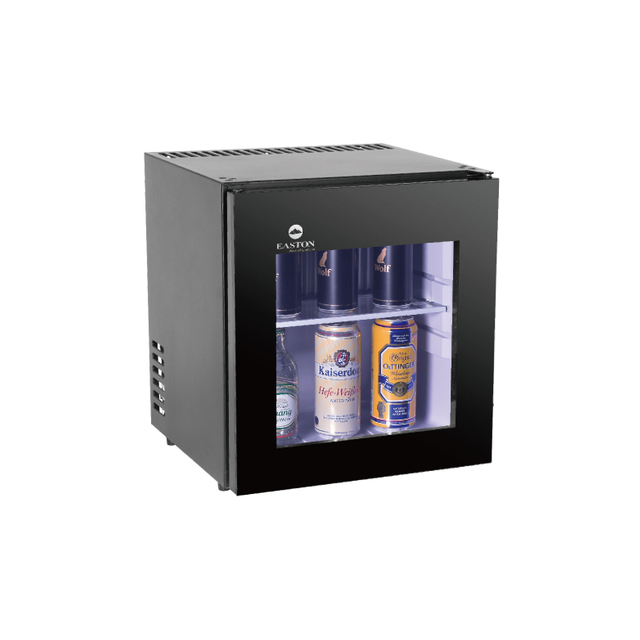
Small footprint also means it doubles as a mini desktop fridge in suites and serviced apartments, where the desk and the beverage zone are the same surface.
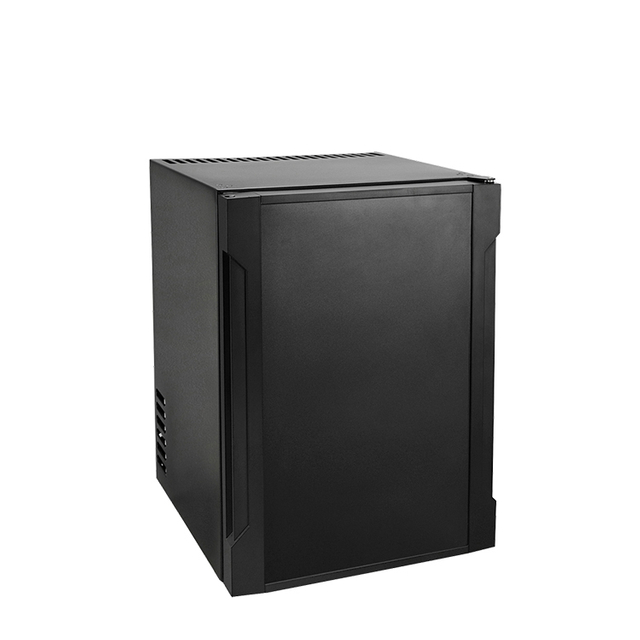
Minibar loss is rarely theft in the dramatic sense. It is a bottle consumed and not billed, a can taken to the pool, a restock counted wrong. A keyed mini fridge with locking door changes the accounting: housekeeping opens, counts, closes, and the discrepancy has a timestamp.
Request the lock at order stage — retrofitting a lock body into a delivered fleet is the expensive path. Decide key control before delivery: master key per floor, or a per-room key held at the desk.
Criterion | Thermoelectric unit (ES7533) | Compressor minibar |
|---|---|---|
Running noise | Effectively 0 dB, no cycling | 30–40 dB, audible at night |
Vibration at nightstand | None | Noticeable on start-up |
Pull-down speed | Slower, best in stable rooms | Faster |
Defrost | Automatic cycle | Auto or manual, model-dependent |
Daily energy | 0.24 kWh/24h, 58W | Typically higher |
Weight | 12.5 kg, easy single-person install | Heavier, compressor mass |
Best fit | Sealed drinks, dairy, suites, quiet rooms | High-turnover chilling, freezing needs |
What the guest notices | What it sounds like in a review | Spec that answers it |
|---|---|---|
Hum at night | "Room was noisy" | Compressor-free cooling, 0 dB running |
Warm bottle | "Minibar didn't work" | 4–6°C working band, stable hold |
Ice and water in the base | "Fridge was dirty" | Automatic defrost cycle |
Door swung into the carpet | "Bad layout" | Reversible hinge, 400 mm width |
Stock dispute at checkout | "Wrong bill" | Door lock on request, counted stock |
High floor electricity | Internal cost line | 0.24 kWh/24h at 58W |
A minibar is an appliance plugged in beside a sleeping guest, so the paperwork matters as much as the cooling.
The ES7533 carries CE marking for the European market and CB certification under the IECEE scheme, which lets a buyer in another country convert the test report locally instead of retesting. The underlying safety standard for this product family is IEC 60335-2-24, covering refrigerating appliances; restriction of hazardous substances is covered by RoHS, and a factory quality system by ISO 9001.
Ask who witnessed the tests. Reports issued through SGS, Intertek or TÜV Rheinland are the ones a hotel group's compliance team will accept without a second round of questions, and for food-contact storage the operator's own HACCP plan should name the unit's temperature band.
Confirm the plug type per property: UK or Euro, and whether the socket sits behind the cabinet or beside it.
Verify the niche depth, not just the width — 435 mm plus a ventilation gap.
Ask for the temperature band in writing, and test one unit in a live room for a week before a floor-wide rollout.
Confirm MOQ and lead time against your rollout schedule; 50 sets and 15–30 days is a common band for OEM programs.
Get the lock decision into the purchase order, not the retrofit budget.
Summary: The minibar is judged in three seconds and remembered for one complaint. Silence, a stable 4–6°C band, automatic defrost and a lock remove the four failure modes guests actually report.
Actionable Advice: Specify a compressor-free unit, insist on the CB report and the temperature band in writing, and put key control in the opening plan rather than the shrinkage report.
CTA: Send us your room layout and voltage requirement — we will match the cabinet depth, plug type and lock configuration to the drawing before you place the order.
Q: Does a silent thermoelectric minibar get drinks properly cold?
A: Yes, within its design band. It holds 4–6°C steadily and is slower to pull down from warm room temperature, so it suits sealed drinks stocked at arrival rather than rapid chilling.
Q: Is 40L enough for a double-occupancy room?
A: For a standard minibar set — water, beer, a few soft drinks, dairy for coffee — yes. Larger suites usually step up to a 60L frame or pair the unit with a tray-top amenity set.
Q: Will housekeeping have to defrost it?
A: No. The automatic defrost cycle handles frost build-up. Staff still wipe the door seal and check the drain line as part of a seasonal routine.
Q: Can the fridge be built into a wooden cabinet?
A: It can sit in a niche, but the ventilation gap at the rear and sides cannot be closed off. Sealed cabinetry shortens compressor life and, on thermoelectric units, pushes the cabinet temperature up.
Q: Which plug and voltage should I specify?
A: 220–240V, 50/60Hz, with UK or Euro plug. Confirm against the destination market and the socket position before production, since plug changes after shipping are costly.
Q: How quiet is it in practice?
A: There is no compressor and no fan cycling in the cooling path, so the running unit is effectively silent. Any noise a guest hears will come from the room, not the cabinet.
Q: What documentation should accompany the shipment?
A: CE and CB certificates, the IEC 60335-2-24 test report, a RoHS declaration and the ISO 9001 certificate, plus the model's energy figure in writing.